How Much Do Hair Extensions Cost in Brisbane? Hair Installation and Maintenance Explained
Hair extensions can be a $400 touch-up or a $2,000 plus transformation. The tricky part is that both prices can be completely reasonable, depending on the hair, method, length, fullness and maintenance plan.
When people search hair extensions cost Brisbane, they’re usually hoping for one neat number. Realistically, the total price is made up of a few moving parts: the hair itself, the fitting method, the installation time and the upkeep after you leave the salon.
If you’re comparing wefts, tapes and keratin bonds, this guide will help you understand what you’re actually paying for, what affects the final quote and how Mercy Arthur structures pricing for clients in Nundah and North Brisbane.

Why hair extension prices vary so much
Hair extensions aren’t priced like a single haircut. A stylist needs to work out what result you want, what your natural hair can safely support and how much hair is needed to get there.
The biggest price factors are:
The extension method
The quality of the human hair
The length of the hair
The amount of hair fitted
The time needed for installation
Blending, cutting and styling
Maintenance appointments
Removal or refitting later on
A client with fine shoulder-length hair who wants gentle fullness will usually need less hair than someone with thick hair wanting waist-length volume. That first result may need a smaller amount of hair and a quicker appointment. The second may need more bundles, more time and more detail in placement.
That’s why a consultation matters. It’s not just a sales chat. It’s where the stylist checks your natural hair, talks through lifestyle, explains realistic results and gives a quote that matches the actual work.
Premium human hair also costs more than lower-quality hair, but it usually looks softer, blends better and can often be reused depending on the method and care. Cheaper hair can seem appealing at first, but if it tangles, sheds or needs replacing quickly, the overall spend can end up higher.
The method you choose affects the total cost
The fitting method has a big impact on price because each method uses different hair, takes a different amount of time and has a different maintenance routine.
Here are the main options clients usually compare.
Tape extensions suit soft volume and quicker installs
Tape extensions use slim pieces of hair that sit flat against the head. They’re popular for adding fullness, filling in sides around the face and creating a natural-looking finish.
They can be a good option for fine to medium hair because they sit quite flat when applied well. Installation is usually faster than smaller individual methods, which can help keep fitting costs lower.
The ongoing cost comes from regular move-up appointments. As your natural hair grows, the tapes move away from the scalp and need to be removed, refreshed and fitted back closer to the root.
Best for:
Fine to medium hair
Natural fullness
Clients who like a flatter feel
Faster fitting appointments
Budget for:
New hair when first installed
Installation
Move-up appointments
Replacement tape or adhesive as needed
Weft extensions work well for bigger transformations
Weft extensions use wider sections of hair. They’re a popular choice for clients wanting a fuller result or a stronger length change.
Wefts can be efficient because one row can add a lot of hair. That said, the final cost depends on how many rows are needed and how much hair goes into each row. Someone wanting soft fullness may only need a smaller amount. Someone wanting thick, long, glam hair may need a much fuller set.
Maintenance usually means moving the wefts back up as your hair grows. The hair can often be reused if it’s good quality and cared for well, which can make wefts good value over time.
Best for:
Fuller results
Medium to thick hair
Length and volume together
Clients wanting a more noticeable transformation
Budget for:
Weft hair
Row installation
Blending and styling
Move-up appointments every several weeks
Keratin bonds are detailed and discreet
Keratin bonds are fitted in small individual pieces. Because the sections are smaller, the stylist can place them carefully through the hair for a very blended result.
This method takes longer to install than tapes or wefts, so the installation cost is often higher. The benefit is flexibility. The stylist can add fullness exactly where it’s needed, which can be helpful around the sides, crown area or for clients who want very natural movement.
Maintenance looks different from tapes or wefts. Keratin bonds are usually worn for a longer period, then removed and replaced rather than moved up in the same way. They also need careful brushing and home care to prevent tangling near the roots.
Best for:
Detailed blending
Fine areas that need targeted fullness
Natural movement
Clients who don’t want rows or wider panels
Budget for:
Individual bond hair
Longer installation time
Removal appointment
Replacement hair when refitting
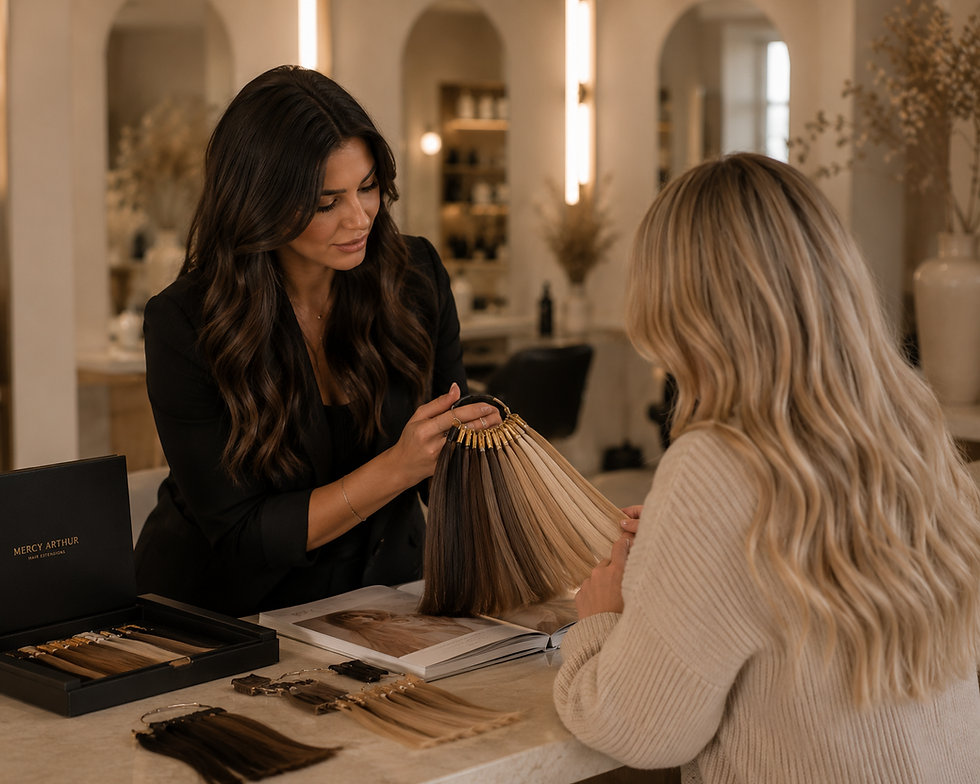
Length and amount of hair can change the quote quickly
If there’s one area that surprises first-time extension clients, it’s the difference between length and amount.
Length is how long the extensions are. Amount is how much hair is installed. Both affect the price.
Longer hair costs more because premium human hair is priced by length and weight. A 22-inch set needs more long, high-quality hair than a 16-inch set. The longer you go, the more important the quality becomes, because long hair needs to stay smooth through the mid-lengths and ends.
The amount of hair matters just as much. Fine hair usually needs less hair to create a natural blend. Thick hair can need a lot more, because the extensions must match the density of the natural hair. If too little hair is installed on thick hair, the ends can look thin or disconnected.
Here’s a simple way to think about it:
Goal | Hair usually needed | Cost impact |
Add fullness only | Lower amount | Lower to mid-range |
Add length to fine hair | Moderate amount | Mid-range |
Add length to thick hair | Higher amount | Higher |
Major length and volume change | Highest amount | Premium quote |
The starting point matters too. If your natural hair is blunt, thick or much shorter than the desired extension length, the stylist may need more hair to soften the line between your natural ends and the extensions.
A good blend often includes a trim or shaping after the extensions are fitted. That finishing step is easy to overlook, but it’s one of the reasons salon-installed extensions look more natural than a basic hair supply-only price.
What Mercy Arthur’s pricing structure includes
Mercy Arthur’s pricing is built around a personalised quote rather than a one-size-fits-all menu. That makes sense for premium hair extensions because two clients can choose the same method and still need different lengths, amounts and fitting time.
At Mercy Arthur, the quote is structured around the main parts of the service, so it’s clear what you’re paying for.
Price component | What it covers | What to check at your consultation |
Human hair extensions | Premium human hair selected for your colour, length and fullness goal | The length, amount and whether the hair can be reused |
Installation | Fitting the chosen method, placement planning, blending and styling | How long the appointment will take and what finish is included |
Maintenance | Moving up, refreshing or checking the extensions depending on the method | How often you’ll need to come back and the expected maintenance price |
Removal | Safe removal when the extensions need to come out or be replaced | Whether removal is included in a future refit or quoted separately |
Aftercare guidance | Advice on washing, brushing, drying and daily wear | Which home care steps are essential for your method |
This structure helps avoid one of the biggest cost traps with extensions: comparing a hair-only price with a full salon service.
A lower quote may not include installation, blending, styling or maintenance. Another quote may look higher but include better-quality hair, careful placement and a finish that actually works with your haircut.
For a fair comparison, ask each salon the same questions:
Is the hair included?
Is installation included?
Is the cut or blend included?
How much is the first maintenance appointment?
How often will maintenance be needed?
Can the hair be reused?
Is removal included later?
If you’re visiting Mercy Arthur in Nundah, your quote should make these parts clear before you commit. That way, you can budget for the first appointment and the months after it.

Installation costs come down to time and detail
Installation isn’t just attaching hair. A good appointment includes planning, sectioning, fitting, checking comfort, blending and styling.
The more detailed the method, the more time the stylist needs. Keratin bonds usually take longer because each small piece is applied individually. Wefts may take less time per amount of hair, but the stylist still needs to build strong, comfortable rows. Tapes can be quicker, although placement still matters if you want them to sit flat and stay hidden.
Installation cost is also shaped by your natural hair.
The stylist may need extra time if:
Your hair is very thick
Your hair is very short compared with the extension length
You need several colours blended
You want both length and high volume
Your hair is fragile and needs gentler placement
You’re correcting old extensions fitted elsewhere
Fine or thinning hair needs special care. More hair isn’t always better. Too much weight can feel uncomfortable or place stress on delicate areas. A skilled stylist will choose a method and amount that gives the best result without overloading the natural hair.
That’s why the cheapest install isn’t always the safest choice. Extensions should feel secure, comfortable and balanced. If they pull, feel too heavy or sit too close to sensitive areas, they can become hard to wear day to day.
Maintenance is part of the real cost
The first appointment gets most of the attention, but maintenance is where the long-term budget really comes in.
Your natural hair keeps growing while the extensions are in. The American Academy of Dermatology notes that scalp hair grows about 1.25 centimetres per month on average. That growth slowly moves the attachment point away from the scalp, which is why extensions need regular upkeep.
Most clients need maintenance every several weeks, but the timing depends on:
Your method
How fast your hair grows
How oily your scalp is
How well you brush and dry your hair
How much heat styling you use
Whether your hair is fine, thick or fragile
Tape maintenance
Tape extensions are usually removed and moved back up. The hair may be reused if it’s still in good condition, but the tape needs refreshing.
Weft maintenance
Wefts are moved up as the natural hair grows. If the hair still looks and feels good, it may be reused across several maintenance visits.
Keratin bond maintenance
Keratin bonds are usually checked during wear, then removed and replaced when they’ve grown out. They’re not maintained in the same way as tapes or wefts.
Home care also affects cost. Extensions need gentle brushing, careful drying near the attachment area and the right washing routine. Going to bed with wet hair, overusing hot tools or rough brushing can shorten the life of the hair, which means replacing it sooner.
The best budget plan includes:
The first full installation
Maintenance appointments
Eventual removal
Replacement hair later on
Basic home care products recommended by the salon

How to budget for extensions without overspending
The best way to control the cost is to be clear about the result you want.
If your main goal is fullness, say that. You may not need the longest hair or the highest amount. If your dream is long, thick hair for everyday wear, it’s better to price that properly from the start rather than underbuying hair and feeling disappointed.
Bring reference photos, but keep them realistic. A photo of very thick waist-length hair may need a premium amount of hair, especially if your natural hair is dense. A softer length change may be more affordable and easier to maintain.
Before booking, ask for a quote that separates:
Hair cost
Installation cost
Maintenance cost
Removal cost
Expected refit or replacement timing
That breakdown makes it much easier to compare options. It also helps you decide where to spend and where to simplify. For example, you might choose a slightly shorter length so you can afford better hair quality, or choose a method with maintenance that suits your routine.
Hair extensions are an investment, but they shouldn’t feel mysterious. Once you understand the method, hair amount, install time and upkeep, the pricing starts to make sense.
For clients around Nundah and North Brisbane, Mercy Arthur’s consultation-based pricing is designed to match the quote to the actual result, rather than forcing every client into the same package.
The smartest next step is simple: decide whether you want fullness, length or both, then ask for a quote that shows the first appointment and the ongoing maintenance. That way, you can choose extensions that suit your hair, your lifestyle and your budget.


Comments